Eileen R. Tabios is a poet working in multiple genres and in-between. She also loves books by writing, reading, publishing, critiquing, romancing and advocating for them. This blog will feature her bibliophilic activities with posts on current book engagements and links to her books and projects related to books.
Showing posts with label THE THORN ROSARY. Show all posts

Thursday, October 7, 2021

NOW AVAILABLE AS FREE PDF: THE THORN ROSARY: SELECTED PROSE POEMS & NEW


Please allow me to give you a PINK ROSE with the news that THE THORN ROSARY, my first Selected Poems project, is now available for free online reading (& teaching) to inaugurate a new "Archives" section at the Marsh Hawk Press website. You can read and download through this link:

 https://marshhawkpress.org/archive/

THE THORN ROSARY presents my poems developing the prose poem form (abstract expressionism and cubism are major influences) with critical essays by poet-scholars Thomas Fink and Joi Barrios. The latter's essay is particularly timely for October as Filipinx-American History Month. Salamat for your time!


Saturday, May 4, 2019

NEW INTERVIEW AT THE ARGOTIST

I’m grateful to Jeffrey Side for interviewing me for The Argotist (given that Jeffrey is the author of this article, I’m also honored he asked to interview me). This is the latest of a series of stellar Argotist interviews. You can see my interview HERE but here’s an excerpt…which I’m highlighting for myself because not caring who reads my poem is a privileged position which, at the time of the interview, I didn’t get into (one must maximize self-awareness). Ah well, next interview! 

JS: In an interview for the Asian Pacific American Journal, you said: ‘In poetry, I try to create an emotion that transcends the dictionary sense of what words mean or what they typically evoke in the current cultural context. There are words that are beautiful outside their meaning, like azure or jasmine or cobalt... For me, this is partly the place of abstract poetry, in addition to what’s happening in that space between, words, lines, sentences and paragraphs’. I agree with this approach very much. How much resistance (if any) have you had to such an approach from critics or publishers? 

ERT:  I’m glad the approach resonates with you, Jeffrey! It’s an approach I’d created in a vacuum (mostly from my love of abstract expressionist art) so it’s always good to hear it validated by another writer.

As regards critical response, …those poems can be seen through my first U.S.-published book, Reproductions of the Empty Flagpole (Marsh Hawk), that sold out its first printing in about six months or so (granted, it’s a small press’ first printing but, still!) And I wouldn’t be surprised if that book has sold more than all of my other books combined. Those poems were also picked up in my selected prose poem collection, The Thorn Rosary (Marsh Hawk). In this sense, the poems seem to have received favorable responses (before they were published in books, many of course were published in literary journals). …

Having said all that, in terms of critical reception—and I would include academia here—my approach takes me outside discernible identity-related poetics and so my books are not go-to publications for those invested in Filipino, Pilipinx, Asian American and related-other literature. I think it’s because linkages with those concerns would not be obvious from the narrative content of the majority of my poems (though some exist). But if I’m disappointed, it’s because I feel there is a 100% linkage with those concerns through the approach to language. For instance, abstraction is one means to disrupt the historical use of English as communication for colonial purposes. But it requires more thought, a deeper thought, to address poems and language in this manner. It’s easier if the text itself is saying the obvious…

But having said all that again, I’m fairly clear in what I’m looking for in a poetry audience. It’s not to have a big audience but an open-minded audience really interested in poetry. So, ultimately, I am totally accepting of the kind of readership I have and the limits to expanding such readership. I don’t need to push my poems on anyone.

Full interview HERE.


Thursday, November 15, 2018

SELECT THE SELECTEDS!


I’ve had about five poetics essays accepted for publication in the last couple of months—folks seem to like my blather. (Indeed, I write this while on a break from writing another such essay requested by another poet.) I think if I have a lot to say on poetics, it comes from how I approach poem-making. And, ever multi-tasking, I’d like to talk about it by answering another question that’s recently come up to me: 
“You have so many books and I’m new to your work—how do  choose?”

My answer is three-fold:

1) Reproductions of the Empty Flagpole as it’s what I consider my true first poetry book (includes sizeable excerpts from technically my first book, Beyond Life Sentences which is not distributed well outside of the Philippines) and it’s always interesting to see any poet’s first book; 

2) Any of my recent books as they would benefit from experience and maturity (hopefully); and/or

3) My favored answer—the one I would say if I could only choose one of these three numbered options: books from my form-based Selected Poem series.

I create Selected Poem books based on a single poetry form. I do so for one reason: so that I can prove to the reader that I didn’t just write poems but helped to expand the landscape of its particular form ... because I believe that if I didn’t expand poetry’s expanse, then my poems threaten to be solipsistic, masturbatory, or derivative (yes, I'm my toughest critic).

Relatedly, the poems inside each book are presented chronologically so that the reader can track how the writing developed before it ends up in expanding the form. I think this layer is interesting as art is a process as much as a result.  

To date, I’ve released three such Selected Poems books:


Forthcoming are two more Selected Poems collections:

The In(ter)vention of the Hay(na)ku: Selected Tercets (1996-2019)

THE GREAT AMERICAN NOVEL: Selected Visual Poetry (2001-2019)

So I have addressed four forms through my Selected Poems series: the prose poem, the catalog or list poem, the tercet, and visual poetry.


I write/have written in other forms but if I haven’t released a “Selected Poem” addressing a particular form, it likely will be because I don’t feel I’ve explored it sufficiently and thus provided my own value-added on to its form. I’ve written, for example, in quatrains, sonnets,  ghazals, etc. and while individual poems may have merit, I don’t feel I’ve (yet) expanded on the form.

An exception to my Selecteds will be the tanka. In the future, I likely will present a Collected Tanka book of the tankas that I will have written only in 2018 (I don't anticipate writing more tankas after this year this year). Thus, that book will be a Collected rather than Selected and, yes, I also feel I expanded that form (for proof until I release that Collected, you can check out  my TANKA, Vol. 1 from Simulacrum Press, 2018).


But to get back to poetics, I don’t think I’d have much to blather about poetry were it  not for my desire to expand the possibilities of whatever form I’m writing. So, if you have to choose among my many books, you might consider one of my Selecteds. Thank you for asking.


Thursday, December 7, 2017

PINAY AND PINYX BOOKS FOR THE HOLIDAYS!

If you'd like to use holiday gift-giving as a means to expand your library for yourself or others, Barbara Jane Reyes has come up with a list of 40 books Pinay and Pinyx authors -- I'm glad to be on list as I love being contextualized with other such writers. You can see the LIST HERE but here's a lovely banner of the book covers (click on image to enlarge)!


And Mom is included too! Her book: DAWAC!


Friday, July 14, 2017

HAIL, RENE NAVARRO


(Photo by Laura Billingham)

Poet, healer and martial artist Rene Navarro ( considered an expert in and therefore qualified to teach acupuncture, dragon-well qigong, Xing shen Zhuang rehabilitative therapy, tai chi chuan Dao Ren and related forms, internal alchemy and spiritual practice, Chi Nei Tsang internal organs massage, Taoist philosophy, Shaolin kung fu or wushu, and arnis de mano--got that?) sent over the above photo of the "Fairy Child" pose that had inspired a poem--a different type of ekphrasis. I share both--Happy Friday. It's always fun to share this poem in a reading because I always end with the Kung Fu movement I learned from Rene (my weak attempt to be a bad-ass):


The poem is from my first U.S.-published book, REPRODUCTIONS OF THE EMPTY FLAGPOLE

and later reprinted in the Selected Prose Poems collection, THE THORN ROSARY


Monday, August 1, 2016

CHICKENS AND TERMITES

are among those deconstructed in my new essay about poetry marketing (and more, of course).  Thanks to Mark Young for publishing "When Poetry, Aided by Chickens, Took Revenge Against the Termites" in the latest issue of Otoliths.  You can go HERE for the essay, but here's a photo-teaser of a dog grieving 30 copies of THE THORN ROSARY thrown out with the basura over in Santo Tomas (the essays explains why):


Here's the Table of Contents for the new Otoliths which contains, as ever, a multiplicity of joys!


Wednesday, May 11, 2016

THE LITERATURE OF THE PHILIPPINES' MARTIAL LAW

The Philippines just held its elections, electing a President who's been described as possessing dictatorial tendencies, and the son of Ferdinand Marcos being a close second in the Vice Presidential race (in the Philippines the races for President and Vice President are conducted individually/separately).  This makes all the more timely the following list (the link is a Facebook link):

A Working List of Martial Law Literature


About my inclusion, I said on Facebook:
I AM VERY PROUD TO BE PART OF THIS LIST. In poetry I have only one loyalty and it's not to a particular community, country, political bent or trends concocted within the so-called literary industrial complex. Having said that, it would have been ridiculous for a writer of my age and roots not to be on this list. I actually have an unpublished short story manuscript on this theme -- I say that only to stress that this poet of Beauty does not believe she lives in a vacuum. I am very proud to be on this list.

I represent through the following poems and short stories -- and am proud to represent:


POEMS:
“List(ing) Poem: Towards the New Filipino Society” by Eileen Tabios  (1)
“My City of Baguio” by Eileen Tabios  (2 and 3)

“The Rebel’s Son” by Eileen Tabios  (4)

“What Can A Daughter Say?” by Eileen Tabios (2 and 3)

SHORT STORIES:
“Negros” by Eileen R. Tabios

“Force Majeure” by Eileen Tabios

“The Man in a White Suit” by Eileen Tabios

“Redeeming Memory” by Eileen Tabios

*****


Wednesday, October 14, 2015

AMERICAN CANYON CELEBRATES FIL-AM HISTORY MONTH ... WITH MY BOOKS!

I was invited to celebrate October as Filipino American History Month over at the American Canyon Public Library. I decided to go as I thought I then could go to neighboring city Vallejo afterwards for dinner.  I should have known better -- this being a Filipino affair, there was plenty of food for dinner and take-home!  Then, I hadn't actually realized so many of my books were in the area's public library system and it was an unexpected treat to see them displayed.  Food and books -- what a fabulous evening!  Thanks to librarian Ricah Quinto and poet-professor Janet Stickmon for organizing the affair.  Both deserve Kudos -- I believe Ricah set up the first Fil-am History celebration for the area's public library system; Janet is not only an accomplished poet/performer but helped set up the Philippine Studies program at Napa Valley Community College. Here's a visual coverage!


Display with THE THORN ROSARY

Caramel Cake!

Display with SUN STIGMATA


Janet Stickmon and Ricah Quinto

Sheila Bare with books!

Huge Filipino flag on library fence.

The kulintang!

In anticipation of the holidays, Filipino parols or lanterns!

Dinner: pancit, ensamada stuffed with chicken adobo and fried lumpia!


Highlighted accomplished Filipinos included Cristeta Comerford


Presenter on the need for Fil-Am Studies


Student performer


Event coordinators and performers

More books!


Tuesday, September 29, 2015

ON NAVIGATING THE EDUCATIONAL LANDSCAPE THAT IS NOT A "LEVEL PLAYING FIELD"

Becoming a parent nearly seven years ago by adopting a 13-year-old also exposed me (for the first time in three decades) to the state of education in the U.S.  I was shocked. Appalled. I'm a public school kiddo and the deterioration in quality from my time to the current is discernibly steep.  And all in the context of unequal educational quality across the country as enhanced by the widening rifts between the poor and the wealthy (among other things). After all, the privileges of wealth translate to better tutoring, more diverse extracurricular activities, and better resume-bolstering activities such as unpaid internships.

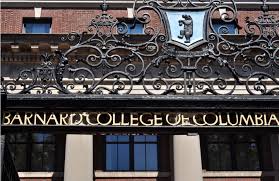
And so I want to share a letter I had sent to the president of my alma mater, Barnard College.  I received a lovely reply yesterday which made me think to share this letter, in part due to the statistics inclination (through standardized tests) of many college applications; I edited out, for privacy reasons, some paragraphs related to my son.

*


Dr. Deborah Spar
President, Barnard College
3009 Broadway
New York, N.Y., 10027

Dear Dr. Spar,

            Years ago, you wrote an article in the Barnard Alumnae Magazine (BAC), the only article ever to remain in my memory (that’s become a colander over time). You wrote about “Tonya,” a student who had applied to Barnard and came from circumstances (poverty, poor quality of pre-college education, among others) that made you worry whether she would be prepared for Barnard’s academic rigor. I hoped then that Barnard, indeed, would accept her …

            Then, through the latest issue of BAC, I see that Barnard did accept her and that Tonya has successfully graduated from Barnard! No words can capture my immense gratitude to you and Barnard for that decision. THANK YOU!!!  Any institution of higher learning certainly should be aware of the structural constraints and un-level landscape that is American education and I’m glad that Barnard was/is sophisticated enough to wo-maneuver through that terrain.

            [...]

  I suppose Tonya’s story is close to my heart as I count myself among the underprivileged kids who applied to college. In looking back at my younger self, I remember—and sheepishly admit to Barnard through you for the first time—fulfilling the required foreign language exam by taking the Russian test. I knew not a single word of Russian. But I remember thinking as a high school student that my Spanish test results were not likely to be stellar (I have difficulty learning foreign languages), so I thought then that I may as well offer a poor test result in a more impressive-for-being-unusual language relative to Spanish which nearly everyone I knew in California was studying. Whether or not that strategy greatly improved my chances, I look back at that younger self and admire her for trying to think out of the box—it is a type of “street smarts” that also made me survive college to be a proud Barnard College graduate today.

I believe more institutions of higher education should be looking for those elements (beyond statistics) that may make a student survive if not thrive in an academic setting. I am so glad—and proud—that Barnard College is this type of an institution, particularly given what you call the “great and tragic divide” that is the country’s educational landscape.

I was a mediocre student at Barnard as I (perhaps mistakenly) privileged my journalism extracurricular experiences to academics.  But Barnard did prepare me well for the world.  That is why I am sending you two of my poetry books,  two Selected Poems projects.  I don’t mean to force you to read my poems (you don’t have to read them!)—but I did want to share the books as physical proof more than 30 years later that when colleges make decisions along “The Right Stuff,” as you’d entitled your latest article, it is a good investment.

By the way, like Tonya, I was also a recipient of generous financial aid…

Again, thank you for myself and for Tonya.  And because Barnard educated me to be part of the world, thanks to Barnard as well for giving me the insight to have, today, a son—my only child. On his behalf, thank you for helping him achieve his potential through family and education.  What we do can have such wide-ranging ramifications, and I am truly grateful to Barnard College for what it does.

Sincerely,

Eileen R. Tabios


Saturday, August 8, 2015

INVENT(ST)ORY: A PRE-ORDER SPECIAL WITH A COMPLIMENTARY BOOK

[Please Forward]

Dear All,

My poetry collection INVENT(ST)ORY: Selected Catalog Poems &New (1996-2010) will be released Sept. 1 by the publisher, Dos Madres Press (Ohio).  Before September, they are making it available as a pre-order, for shipment on Sept. 1.  As they are a new publisher for me, I’m doing what I can to help them promote the book.  In this case, if you do a pre-order with them, I will send you separately another one of my books!

You can pre-order with Dos Madres by going to https://www.dosmadres.com/shop/inventstory-by-eileen-r-tabios/

You can choose your complimentary book by going to my website and clicking on PUBLICATIONS at http://eileenrtabios.com   As long as the book is not out of print, it will be available for you. Email me your choice through galateaten at gmail dot com

INVENT(ST)ORY retails for $20, but hopefully that’s a bargain for a 222-page book sized at 8”x10”.  More information about the book is available at http://eileenrtabios.com/poetry/inventstory-selected-catalogue-poems-new/

As background, INVENT(ST)ORY is my second Selected Poems project. I’ve chosen to focus my Selected Poems projects on poetic form.  INVENT(ST)ORY is focused on the catalog or list poem form.  My first Selected, THE THORN ROSARY (Marsh Hawk Press, 2010) is focused on the prose poem form.  I focus on poetic form because I want to lay out clearly whether or not my poetry has contributed to expanding poetry’s landscape through its forms. I am laying it on the line...and it'll be easy to judge me! Whether you as reader agree or disagree, I would love to hear from you. 

Both of my Selected Poems were edited by one of the most astute poetry critics today, the poet-painter-scholar Thomas Fink. I mention this as he also provides an Introduction in each book that is useful and educational, not just on my writings but on the poetry forms.

Thanks in advance for your consideration,

Eileen R. Tabios


(Eileen's two Selecteds: THE THORN ROSARY and INVENT(ST)ORY)